
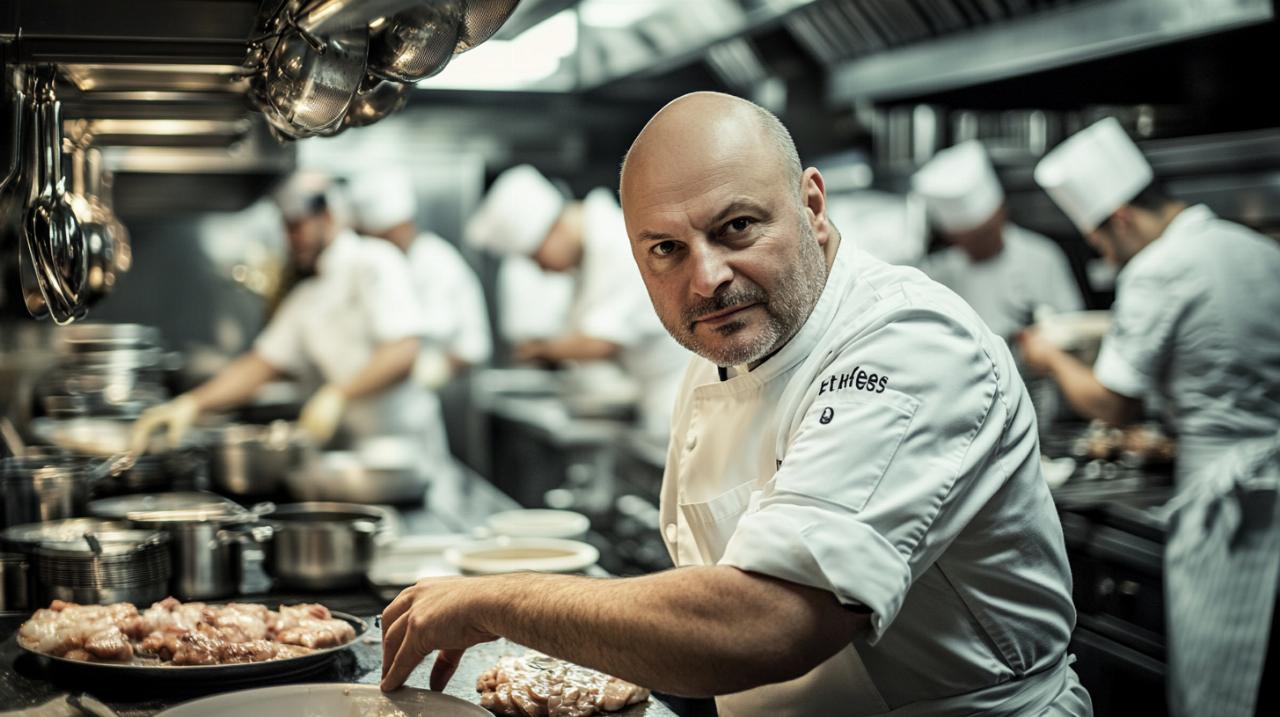
Philippe Etchebest has become one of the most recognizable faces on French television, not for his delicate whispers or gentle encouragement, but for his fiery confrontations and uncompromising standards in the kitchen. His work transforming failing restaurants across France has captivated audiences who tune in to witness raw emotion, culinary chaos, and ultimately, redemption. The chef's no-nonsense approach has turned struggling establishments into success stories, proving that sometimes a bit of tough love is exactly what restaurateurs need to turn their fortunes around.
The fiery chef who transformed french culinary television
From michelin-starred excellence to small screen sensation
Philippe Etchebest earned his reputation long before cameras followed him into troubled kitchens. His Michelin-starred restaurant in Bordeaux established him as a culinary authority with exacting standards and a passion for excellence that bordered on obsession. When television producers approached him about helping struggling establishments across France, they knew they were getting someone who would never compromise on quality. His transition from elite dining to mainstream television happened seamlessly because his authenticity remained constant. Unlike some chefs who soften their edges for the cameras, Etchebest brought the same intensity he displayed in his own kitchen to every episode of the show that would make him a household name. His background in haute cuisine gave him credibility that resonated with both professionals and home cooks watching the series unfold.
What makes philippe etchebest's approach so brutally effective
The secret behind Etchebest's success lies not just in his volcanic temper, but in his ability to diagnose fundamental problems within minutes of entering an establishment. He identifies issues ranging from poor hygiene to misguided menu choices with surgical precision. His confrontational style forces restaurant owners to face uncomfortable truths they have been avoiding for months or even years. When he discovers frozen ingredients masquerading as fresh fare, his reaction is immediate and devastating for those caught cutting corners. The chef understands that difficulty in the restaurant business often stems from denial, and his method of shattering that denial creates the foundation for genuine transformation. Staff members initially terrified of his presence often become his most ardent supporters once they understand his ultimate goal is their success. His approach combines brutal honesty with practical solutions, creating a formula that has proven effective across countless episodes.
Five unforgettable establishment transformations across france
The saint-malo seafood disaster: when fresh ingredients meet frozen reality
One of the most memorable episodes featured a restaurant in Saint Malo, the Brittany coastal town famous for its seafood. The establishment's location suggested menus brimming with the freshest catches from local fishermen, but Etchebest discovered a nightmare scenario. The restaurateur had been serving frozen products to unsuspecting customers while advertising everything as locally sourced. The revelation sparked one of the chef's most explosive confrontations, with his disappointment palpable as he confronted the owner about this fundamental betrayal of trust. The transformation process required not just menu changes but a complete philosophical shift in how the business operated. By the end of the episode, the establishment had forged genuine relationships with local suppliers and embraced the quality ingredients that had been available all along. The staff rediscovered their pride in serving authentic dishes, and the restaurant's reputation began its slow climb back from the brink.
Alexandre's Nouvelle-Aquitaine Nightmare: A Family Business on the Brink
In another striking episode, Etchebest traveled to Nouvelle Aquitaine to help Alexandre, a young restaurateur whose family establishment was drowning in debt and dysfunction. The situation was particularly poignant because multiple generations had poured their dreams into the business, only to watch it spiral into chaos. Alexandre struggled with managing both kitchen operations and family dynamics, a difficulty that manifested in inconsistent food quality and confused staff who received conflicting instructions daily. Etchebest recognized that saving this restaurant required addressing personal relationships as much as culinary standards. His intervention forced uncomfortable conversations between family members who had been avoiding honest communication for years. The transformation involved streamlining the menu to focus on dishes that showcased regional ingredients from Aquitaine, eliminating the sprawling options that had overwhelmed the kitchen. By the series conclusion for this particular establishment, Alexandre had found his confidence as a leader, and the family had rediscovered why they fell in love with the restaurant business in the first place.
Behind the Scenes: Why Kitchen Nightmares Resonates With British and French Audiences Alike
The restaurateur's journey from denial to redemption
The enduring appeal of watching Etchebest transform struggling businesses lies in the universal human story at the heart of each episode. Restaurant owners typically begin the process defensive and convinced that external factors are responsible for their difficulties. The chef's ability to strip away these excuses and reveal the core problems creates compelling television that transcends cultural boundaries. British audiences familiar with similar format shows recognize the dramatic arc that takes participants from resistance through crisis to eventual acceptance and change. What makes the French version particularly engaging is Etchebest's genuine emotional investment in each restaurateur's success. He celebrates victories with the same intensity he brings to his criticisms, creating moments of authentic joy when staff members master new techniques or owners finally understand what their establishments could become. The transformation journey documented across each season shows that redemption is possible even for businesses that seem beyond saving, provided the people involved are willing to embrace difficult truths and commit to sustained effort.
Lessons for struggling establishments: quality over quantity every time
The consistent message across every episode, from Saint Malo to the smallest village establishment, centers on an unwavering commitment to quality. Etchebest repeatedly demonstrates that restaurateurs who try to be everything to everyone end up excelling at nothing. His transformations typically involve dramatic menu reductions, eliminating dozens of mediocre options in favor of a focused selection of dishes the kitchen can execute brilliantly every time. This philosophy extends beyond food to encompass service standards, cleanliness protocols, and staff training. The chef's insistence on excellence in every aspect of restaurant operations reflects his Michelin-starred background while remaining accessible to smaller establishments with limited resources. His ability to adapt high-end principles to modest budgets gives struggling restaurant owners practical tools they can implement immediately. The lasting impact of his interventions becomes evident in follow-up segments that show establishments thriving months after the cameras departed. These success stories inspire other restaurateurs facing similar difficulties to seek help rather than persist with failing strategies. The television series has thus become more than entertainment, serving as an educational resource for anyone in the hospitality industry willing to learn from others' mistakes and triumphs.